Monday, September 27, 2010

I'm fascinated by this

This article really got me thinking about a lot of things. A "passive house" is basically a super-insulated house that could reduce energy usage by 90%. That's amazing. Equally amazing is that there are only 13 in the US, while there are over 2500 in Europe. Truthfully, 2500 out of hundreds of millions of houses in Europe isn't that great, either, but as usual, Europe is so far ahead of us in just about all things green. I'd love to see the floorplans of this house.

WHEN Barbara Landau, an environmental and land-use lawyer in suburban Boston, was shopping for insurance on the energy-efficient home she and her husband were building in the woods just outside of town here, she was routinely asked what sort of furnace the home would have.

“None,” she replied.

Several insurers declined coverage.

“They just didn’t understand what we were trying to do,” Mrs. Landau recalls. “They said the pipes would freeze.”

They won’t. A so-called passive home like the one the Landaus are now building is so purposefully designed and built — from its orientation toward the sun and superthick insulation to its algorithmic design and virtually unbroken air envelope — that it requires minimal heating, even in chilly New England. Contrary to some naysayers’ concerns, the Landaus’ timber-frame home will be neither stuffy nor, at 2,000 square feet, oppressively small.

Click here for the full article

Blogger Matthew Allan is a specialist in Savannah Real Estate, focusing on Savannah's downtown historic districts, including the Landmark Historic District, Victorian Historic District, Thomas Square Historic District, Starland Historic District, Baldwin Park, and Ardsley Park Historic District.

Friday, September 24, 2010

10 Ways to Green Your Home Under Ten Bucks

(and if you don't have ten bucks, five that are free)

Free. Nothing. Nada.
Things you can do that will make a real difference for no money at all.

1. Lower water heater temperature to 120°F
2. Decrease Thermostat temperature by 3°F
3. Wash clothes in cold water
4. Air dry clothes during summer
5. Turn off unneeded lights

Under Ten Bucks

Save Heat
1. Seal your windows with strippable caulk
This is the clear stuff that is designed to peel off when it is time to open the windows again, and seals the gaps that occur at any moving part of a window. This is particularly important if you have old windows where the seals have loosened up a bit.

2. Shrink-wrap your windows
Get the plastic films that tape around your windows and then shrink tight under the heat from a hair dryer. They cut heat loss and are almost invisible. Not suitable for houses with cats, as we found out the hard way.

3. Weatherstrip your doors
A surprising amount of air leaks around them. Just be sure that the door will still close properly; I have added weatherstrip and then had to remove it again as the door just wouldn't close properly with the added foam.

4. Get a snake
Or make your own—a door snake stops draughts from under a door where it is hard to weatherstrip.

5. Get some cheap slippers
Or a hoodie. The easiest way to feel warmer and save energy is to wear more clothing. It also keeps your house cleaner and warmer.

6. Change your furnace filter
The furnace has to work harder to push through all the schmutz that gets caught in your filter if it is doing its job.

Save Water

7. Lose the drips
A dripping faucet can waste 20 gallons of water a day. A leaking toilet can use 90,000 gallons of water in a month. Get out the wrench and change the washers on your sinks and showers, or get new washerless faucets. Keeping your existing equipment well maintained is probably the easiest and cheapest way to start saving water.

8. Add a faucet aerator
Mixing in the air reduces the water consumed. Some aerators have an on/off lever so that you can stop most of the water flow without affecting the temperature, saving even more water.

Save Electricity
9. Get a switched power bar
Plug all your wall-warts into the power strip so that it is easy to turn things off when you are not using them.

10. Change a light bulb
Still have any incandescent bulbs lighting your home? Time to change them; they have better color, faster starts and less mercury than ever.

Just be sure to recycle them properly!

View original article: http://planetgreen.discovery.com/home-garden/green-home-ten-dollars.html

Blogger Matthew Allan is a specialist in Savannah Real Estate, focusing on Savannah's downtown historic districts, including the Landmark Historic District, Victorian Historic District, Thomas Square Historic District, Starland Historic District, Baldwin Park, and Ardsley Park Historic District.

Thursday, September 23, 2010

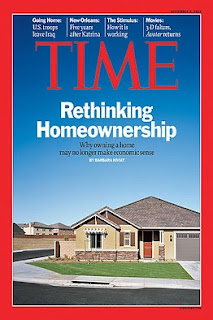
TIME Magazine's "The Case Against Homeownership"


Here's the TIME magazine article that the Wall Street Journal debates in my previous post. Both are instructive reading.

Homeownership has let us down. For generations, Americans believed that owning a home was an axiomatic good. Our political leaders hammered home the point. Herbert Hoover argued that homeownership could "change the very physical, mental and moral fiber of one's own children." Franklin Roosevelt held that a country of homeowners was "unconquerable." Homeownership could even, in the words of George H.W. Bush's Secretary of Housing and Urban Development (HUD), Jack Kemp, "save babies, save children, save families and save America." A house with a front lawn and a picket fence wasn't just a nice place to live or a risk-free investment; it was a way to transform a nation.

Houses owned by the people who lived in them, we believed, created social and financial stability — more-involved citizens, safer neighborhoods, kids who did better in school. No wonder leaders of all political stripes wanted to spend more than $100 billion a year on subsidies and tax breaks to encourage people to buy.

Read more: http://www.time.com/time/business/article/0,8599,2013684-1,00.html

Wall Street Journal's 10 Reasons to Buy a Home


This is such a bipolar time in the real estate market--TIME magazine ran a cover story talking about whether homeownership is passe. Then the WALL STREET JOURNAL ran a counter-story with reasons why the time is right. I'm personally in the WSJ camp--not only in their camp, but desperately trying to find a new place. One of my clients who is under contract for a great house a block from Forsyth Park just locked into a 30-year fixed rate mortgage at 4.0%. That is absurd--not to mention the price they are paying for one of the really special houses downtown. They looked at 30 houses, at least, before finding this one, but when you find the right one, you have to make your move.

Enough with the doom and gloom about home ownership.

Sure, maybe there's more pain to come in the housing market. But when Time magazine starts running covers that declare "Owning a home may no longer make economic sense," it's time to say: Enough is enough. This is what "capitulation" looks like. Everyone has given up.

After all, at the peak of the bubble five years ago, Time had a different take. "Home Sweet Home," declared its cover then, as it celebrated the boom and asked: "Will your house make you rich?"

But it's not enough just to be contrarian. So here are 10 reasons why it's good to buy a home.

1. You can get a good deal. Especially if you play hardball. This is a buyer's market. Most of the other buyers have now vanished, as the tax credits on purchases have just expired. We're four to five years into the biggest housing bust in modern history. And prices have come down a long way– about 30% from their peak, according to Standard & Poor's Case-Shiller Index, which tracks home prices in 20 big cities. Yes, it's mixed. New York is only down 20%. Arizona has halved. Will prices fall further? Sure, they could. You'll never catch the bottom. It doesn't really matter so much in the long haul.

Where is fair value? Fund manager Jeremy Grantham at GMO, who predicted the bust with remarkable accuracy, said two years ago that home prices needed to fall another 17% to reach fair value in relation to household incomes. Case-Shiller since then: Down 18%.

2. Mortgages are cheap. You can get a 30-year loan for around 4.3%. What's not to like? These are the lowest rates on record. As recently as two years ago they were about 6.3%. That drop slashes your monthly repayment by a fifth. If inflation picks up, you won't see these mortgage rates again in your lifetime. And if we get deflation, and rates fall further, you can refi.

3. You'll save on taxes. You can deduct the mortgage interest from your income taxes. You can deduct your real estate taxes. And you'll get a tax break on capital gains–if any–when you sell. Sure, you'll need to do your math. You'll only get the income tax break if you itemize your deductions, and many people may be better off taking the standard deduction instead. The breaks are more valuable the more you earn, and the bigger your mortgage. But many people will find that these tax breaks mean owning costs them less, often a lot less, than renting.

4. It'll be yours. You can have the kitchen and bathrooms you want. You can move the walls, build an extension–zoning permitted–or paint everything bright orange. Few landlords are so indulgent; for renters, these types of changes are often impossible. You'll feel better about your own place if you own it than if you rent. Many years ago, when I was working for a political campaign in England, I toured a working-class northern town. Mrs. Thatcher had just begun selling off public housing to the tenants. "You can tell the ones that have been bought," said my local guide. "They've painted the front door. It's the first thing people do when they buy." It was a small sign that said something big.
5. You'll get a better home. In many parts of the country it can be really hard to find a good rental. All the best places are sold as condos. Money talks. Once again, this is a case by case issue: In Miami right now there are so many vacant luxury condos that owners will rent them out for a fraction of the cost of owning. But few places are so favored. Generally speaking, if you want the best home in the best neighborhood, you're better off buying.

6. It offers some inflation protection. No, it's not perfect. But studies by Professor Karl "Chip" Case (of Case-Shiller), and others, suggest that over the long-term housing has tended to beat inflation by a couple of percentage points a year. That's valuable inflation insurance, especially if you're young and raising a family and thinking about the next 30 or 40 years. In the recent past, inflation-protected government bonds, or TIPS, offered an easier form of inflation insurance. But yields there have plummeted of late. That also makes homeownership look a little better by contrast.
7. It's risk capital. No, your home isn't the stock market and you shouldn't view it as the way to get rich. But if the economy does surprise us all and start booming, sooner or later real estate prices will head up again, too. One lesson from the last few years is that stocks are incredibly hard for most normal people to own in large quantities–for practical as well as psychological reasons. Equity in a home is another way of linking part of your portfolio to the long-term growth of the economy–if it happens–and still managing to sleep at night.

8. It's forced savings. If you can rent an apartment for $2,000 month instead of buying one for $2,400 a month, renting may make sense. But will you save that $400 for your future? A lot of people won't. Most, I dare say. Once again, you have to do your math, but the part of your mortgage payment that goes to principal repayment isn't a cost. You're just paying yourself by building equity. As a forced monthly saving, it's a good discipline.

9. There is a lot to choose from. There is a glut of homes in most of the country. The National Association of Realtors puts the current inventory at around 4 million homes. That's below last year's peak, but well above typical levels, and enough for about a year's worth of sales. More keeping coming onto the market, too, as the banks slowly unload their inventory of unsold properties. That means great choice, as well as great prices.

10. Sooner or later, the market will clear. Demand and supply will meet. The population is forecast to grow by more than 100 million people over the next 40 years. That means maybe 40 million new households looking for homes. Meanwhile, this housing glut will work itself out. Many of the homes will be bought. But many more will simply be destroyed–either deliberately, or by inaction. This is already happening. Even two years ago, when I toured the housing slump in western Florida, I saw bankrupt condo developments that were fast becoming derelict. And, finally, a lot of the "glut" simply won't matter: It's concentrated in a few areas, like Florida and Nevada. Unless you live there, the glut won't have any long-term impact on housing supply in your town.

View original article here: http://online.wsj.com/article/SB10001424052748703376504575492023471133674.html

Blogger Matthew Allan is a specialist in Savannah Real Estate, focusing on Savannah's downtown historic districts, including the Landmark Historic District, Victorian Historic District, Thomas Square Historic District, Starland Historic District, Baldwin Park, and Ardsley Park Historic District.

Wednesday, September 15, 2010

Refinancing Mortgage Might Have its Drawbacks

Good article below about considering your options and alternatives when refinance opportunities come knocking in our current low interest rate environment. Short version is that you can always keep a 30-year mortgage and pay it down quicker, turning it into a 15-year mortgage. The risk of having an actual 15-year-mortgage is getting stuck with higher monthly payments, even if it's a shorter mortgage length, and then not being able to make the higher payments in the future.

RISMEDIA, September 14, 2010--(MCT)--Mark your calendars. The Van Ripers have moved up the date of their mortgage-burning party. When the couple purchased their St. Paul, Minn., home in 2005, they locked in a 6 percent interest rate for 30 years. But with mortgage rates at jaw-dropping lows, they were able to refinance into a 4.125 percent, 15-year mortgage that will save them more than $100,000 in interest and allow them to pay off the mortgage by the time their 3-year-old son is in college. All this for a $100 increase in their monthly mortgage payment.

Shorter-term mortgages are deliciously low. Last week, the average rate for a 15-year fixed-rate mortgage was 3.83 percent with an average 0.6 point (a point equals 1 percent of the loan value), according to Freddie Mac. The rate on a 30-year, fixed-rate mortgage wasn't much higher, weighing in at an average 4.35 percent with an average 0.7 points paid.

Refinancing to a shorter-term mortgage if you can afford the payment seems like an obvious smart-money move. You'll pay far less in interest, get rid of the monthly fixed expense earlier, and have freer cash flow in retirement. Plus there's the high that homeowners feel when they imagine making their last mortgage payment.

"It's just nice to think it's going to be done," said 33-year-old David Van Riper.

But there's a camp out there that believes locking into a shorter-term mortgage is unwise, especially when rates are so low on 30-year mortgages and economic uncertainty so high.

When Kevin McKinley, a Wisconsin financial planner and co-host of Wisconsin Public Radio's "On Your Money," learned I refinanced into a 15-year loan, he e-mailed me a list of reasons why I shouldn't have. His primary concern? That I've locked myself into higher payments at a time when the job market is shaky and home equity is tougher to access. "It's about having the cash right now and being able to do what you wish instead of being at the mercy of the bank, or the real estate market if you have to sell, or your own job," he said.

McKinley would have refinanced into a 30-year loan and stashed any money freed up by the lower payment in a savings account or CD.

I could also have taken the excess and put that money to work in the stock market or even in bonds. Considering my mortgage interest rate after the tax deduction is in the 3 percent territory, it wouldn't be hard to beat that in the market. But that's not a sure thing.

"Given the recent variations in the stock market and whatnot and the low interest rate in savings, it just seemed to make sense to put it into the house," Van Riper said.

Alex Stenback, a mortgage banker with Residential Mortgage Group in Minnetonka, Minn., said this difficult economic stretch has brought out the conservative side in most of us.

"When savings rates go up, when people start talking about 15-year mortgages or paying their mortgages off ahead of schedule, that's really just a form of self-insurance. They're no longer as comfortable with the fact that the sky's the limit and the ladder goes up for them economically," he said.

Anticipating your financial future is hard, but that's exactly what Bill Schwietz, president of the Minnesota Mortgage Association, tries to get clients to do when choosing between loans. He's seen several friends who started with 30-year mortgages, then refinanced to 15-year loans with a big promotion and then refinanced into a 30-year loan again when their children's hockey fees and private school tuition became too much.

Problem is, if you lengthen your loan and roll in closing costs with each refinancing, you'll never pay down the principal.

Kate Wilson, branch manager for Fairway Independent Mortgage in Bloomington, Minn., said 15-year loans can certainly make sense. But she always reminds her clients that there's no law against paying off a 30-year mortgage on a 15-year schedule. You'll still save a boatload, even if your rate on a 30-year mortgage is half a percentage point higher than a 15-year would have been.

Here's the example she calculated: On a $200,000, 30-year mortgage at 4.5 percent, you'll pay $164,813 in interest with a monthly payment of $1,013.37. Pay down that loan in 15 years (by making prepayments of about $517 per month on the mortgage balance) and your monthly payment would be $1,529.98 and you'd pay $75,396 in interest. If you went with a 15-year mortgage at 4 percent instead, you'd pay $66,286 in interest and have a payment of $1,479.37.

So ask yourself if you'd be willing to pay a few thousand dollars more in interest for the flexibility of having an extra $500 a month to cover life's expenses without tapping home equity. Also assess whether you're disciplined enough to actually prepay the loan. If the answer is no, then a shorter-term mortgage is a good fit, provided you can truly afford it.

Most mortgage bankers, including Wilson, have calculators on their websites. The financial calculator site dinkytown.net has several calculators to choose from, including a 15-year vs. 30-year mortgage calculator.

Of course, there's that little problem of declining home values that's making it hard for people who put little money down or bought at the peak to refinance. But having little equity doesn't slam the door. Borrowers with an FHA loan can reduce their rate without an appraisal using the FHA streamline refinance option if they meet the requirements, which include paying the mortgage on time, having income and meeting the minimum credit score requirements set by their lender (generally around 640 these days, Stenback said).

There's also the government's Home Affordable Refinance Program as well as the recently launched short refinance program for non-FHA borrowers who are underwater.

Even if your current circumstances lock you out of a refi, there's nothing stopping you from prepaying a longer-term mortgage. Make an extra payment on your 30-year loan each year and you'll retire it approximately seven years earlier.

"That's a huge pile of money," Wilson said.

By Kara McGuire, (c) 2010, Star Tribune (Minneapolis)
Blogger Matthew Allan is a specialist in Savannah Real Estate, focusing on Savannah's downtown historic districts, including the Landmark Historic District, Victorian Historic District, Thomas Square Historic District, Starland Historic District, Baldwin Park, and Ardsley Park Historic District.